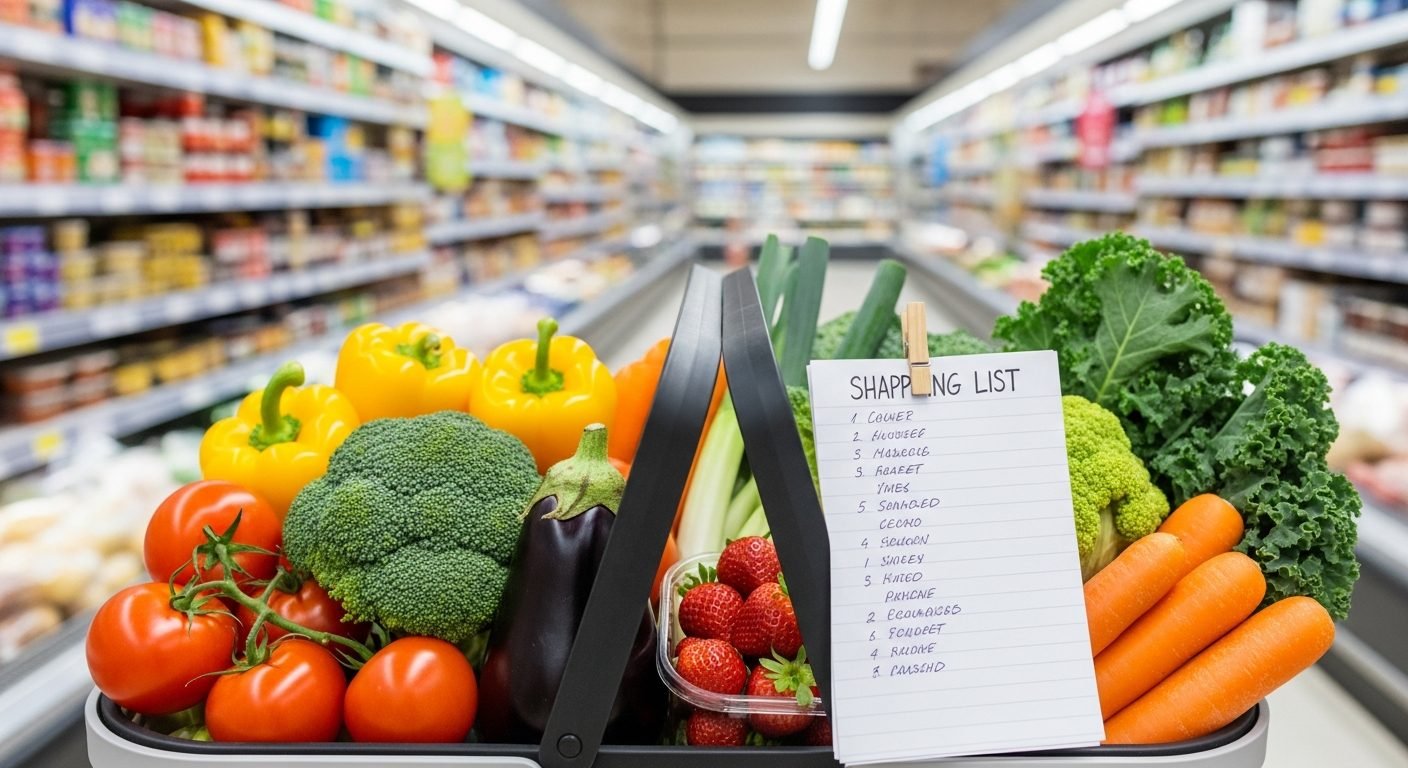
The Average Family Wastes $1,500 Per Year on Groceries
According to the USDA, Americans waste approximately 30–40% of the food supply. For the average family of four, that’s $1,500–$2,000 in groceries bought but never eaten.
The grocery store is also a masterclass in behavioral economics — specifically, how to get you to spend more than you planned. Understanding these tactics, combined with a systematic approach, will transform your food spending.
This isn’t about couponing. It’s about smart systems.
The Foundation: The Strategic Shopping List
Shop With a Meal Plan
Never enter a grocery store without knowing exactly what you’re cooking this week. A 15-minute weekly meal planning session creates your precise shopping list, eliminates impulse purchases, and prevents the “what’s for dinner?” crisis that leads to expensive takeout.
The framework:
- Plan 5 dinners (2 nights for leftovers, 2 for flexibility)
- Plan breakfasts and lunches (often the same things repeated)
- Generate your shopping list from this plan
- Add household staples to deplete
Shop Your Pantry First
Before writing your list, audit your pantry, fridge, and freezer. You likely have more usable food than you think. Build meals around items you already have.
This single habit prevents the most common form of food waste: buying more of something you already have.
Understanding Grocery Store Tactics
The Perimeter vs. The Interior
The healthiest (and often cheapest per nutrient) foods are on the store’s perimeter: fresh produce, meat, dairy, eggs. The interior aisles contain the highly processed, heavily marketed, expensive-per-calorie foods.
Shop the perimeter first. Enter the interior with a specific list.
Unit Price Is Everything
The price tag isn’t the price. The unit price is. Many stores display unit prices (price per ounce, per count, per pound) on the shelf label. Always compare unit prices, not package prices.
The larger size is usually cheaper per unit — but not always. Store brands versus name brands are often manufactured by the same company.
Loss Leaders Are Your Friends
Grocery stores advertise deeply discounted “loss leaders” — items sold at or below cost to get you in the store. They make their money on everything else you buy while there.
Strategy: Only buy the loss leaders. Get in, get the deal, get out. Don’t let the loss leader become an excuse to buy a full cart of unplanned items.
The Strategic Shopping System
1. Pick One Primary Store, Know It Well
Learn your store’s layout cold. Regulars who know where everything is spend less time in the store, experience less decision fatigue, and make fewer impulse purchases.
2. Shop Once Per Week
Frequent store visits dramatically increase spending. Each trip adds $30–50 in unplanned purchases on average. One strategic weekly shop — with a complete list — minimizes this.
3. Never Shop Hungry
Studies show hungry shoppers spend 30% more and make more unhealthy choices. Eat before shopping. This is non-negotiable.
4. Use Store Apps for Digital Coupons
Virtually every major chain has a loyalty app with digital coupons that don’t require clipping. Clip these before every shopping trip. Takes 3 minutes. Can save $10–20 per trip.
5. Buy Produce in Season
Seasonal produce is dramatically cheaper, tastes better, and is more nutritious than out-of-season produce flown from across the world. Learn what’s in season each month.
General guide:
- Spring: Asparagus, peas, artichokes, strawberries
- Summer: Tomatoes, corn, peaches, zucchini, berries
- Fall: Apples, pumpkins, butternut squash, pears
- Winter: Citrus, root vegetables, hearty greens
6. Embrace Frozen Produce
Frozen vegetables and fruits are harvested at peak ripeness and flash-frozen — preserving nutrients better than “fresh” produce that’s been in transit for weeks. They’re also significantly cheaper. Keep a well-stocked freezer of frozen vegetables for easy, economical cooking.
7. Master the “Whole Animal” Principle for Protein
Chicken thighs cost 40–60% less than chicken breasts and are arguably more flavorful. Bone-in cuts cost less than boneless. Whole chickens cost less per pound than parts.
The cheapest quality protein sources: eggs, canned fish, dried beans and lentils, whole chickens, pork shoulder, and chicken thighs. Learn to cook these well.
8. Store Brands vs. Name Brands
For most staple categories, store-brand products are manufactured to the same standard as name brands (sometimes literally the same product in different packaging). Categories where store brands shine: canned goods, dried pasta, frozen vegetables, olive oil, spices, cleaning products, and over-the-counter medications.
Categories where quality differences might justify name brands: fresh meat, specialty items, and products where you have brand-specific preferences.
Reducing Food Waste: The Other Half of the Equation
FIFO: First In, First Out
When you unpack groceries, move older items to the front and put new purchases behind them. You’ll naturally use older items first and dramatically reduce food waste.
The Fridge Clear-Out Night
Designate one night per week (Friday works well) as “use what’s in the fridge” night. Improvise a meal from whatever needs to be used. This builds cooking creativity and prevents waste.
Freeze Before Waste
Before food spoils, freeze it. Bread, meat, cooked grains, blanched vegetables, and many other items freeze well. The freezer is your waste-prevention tool.
The Psychology of Smart Shopping
Understanding why you overspend is as important as the tactical systems above. Grocery stores employ professional environmental psychologists. Here’s what they’re doing and how to counter it:
The slow cart effect: Wide aisles and large carts encourage slower movement and larger purchases. Move with purpose and resist the gravitational pull of displays at the end of each aisle — these “endcap” displays are premium positions paid for by manufacturers, not curated for your benefit.
The eye-level trap: The most profitable (highest-margin) products are placed at eye level. The best value is almost always on the top or bottom shelves. Train yourself to look up and down before accepting what’s directly in front of you.
Ambient music manipulation: Slower music has been shown to increase time spent in stores and spending by up to 38%. Be aware of time passing and keep a running mental clock during your shopping trip.
The scarcity trigger: “Limited time,” “while supplies last,” and “sale ends Sunday” all trigger fear of missing out. Genuine sales exist, but artificial urgency is a manipulation tactic. If you weren’t planning to buy it before seeing the sign, don’t buy it now.
Building a Permanent Shopping System
The real breakthrough comes when these strategies stop requiring effort and become your automatic operating procedure. The goal is a repeatable weekly system:
- Sunday: 15 minutes of meal planning → shopping list generation
- Sunday or Monday: One focused shopping trip with your complete list
- Friday: Fridge clear-out night to eliminate waste before the next shopping cycle
When this system runs on autopilot, you’ll spend less, waste less, and eat better simultaneously — not through heroic effort, but through better design.
Your Monthly Savings Roadmap
Implementing these strategies consistently can realistically save:
- Meal planning + pantry audit: $80–100/month
- Store brand switching: $40–60/month
- Digital coupons: $30–50/month
- Reduced food waste: $50–80/month
- Strategic protein choices: $40–60/month
Total potential savings: $240–350/month
This isn’t about sacrifice. Eating smart, cooking seasonally, and wasting less food is objectively better for your health, your wallet, and the planet.
Start with one strategy this week. Build from there.
Leave a Reply