
Category: wealth-building

  • 7 Passive Income Streams You Can Build Starting This Month

    7 Passive Income Streams You Can Build Starting This Month

    The Truth About Passive Income

    Let’s be clear about something: passive income is rarely truly passive — at least not initially. Every income stream requires upfront investment of either time, money, or both. “Passive” means that after the setup, it generates income with minimal ongoing effort compared to a traditional job.

    The goal isn’t to do nothing. The goal is to build assets that work for you while you sleep — so your time becomes more valuable and more free.

    Here are seven legitimate passive income streams, ranked by startup complexity and capital requirements.

    Stream 1: Dividend Investing (Lowest Barrier to Entry)

    Startup: $1,000–$10,000+
    Time to income: Immediate (first dividend payment within 90 days)
    Realistic monthly income (on $50k invested): $100–$200/month

    Dividend-paying stocks, ETFs, and REITs (Real Estate Investment Trusts) distribute regular payments — typically quarterly — to shareholders. High-quality dividend stocks yield 2–5% annually.

    This isn’t a get-rich-quick stream, but it’s genuinely passive after initial setup, scales directly with capital invested, and compounds powerfully over decades.

    Best vehicles:

    • Dividend ETFs: VYM (Vanguard High Dividend Yield), SCHD (Schwab Dividend ETF)
    • REITs: Own real estate income without managing property
    • Dividend Aristocrats: S&P 500 companies that have increased dividends for 25+ consecutive years

    Action step: Open a brokerage account (Fidelity, Vanguard, Schwab), set up automatic investing, and reinvest dividends until you need the income.

    Stream 2: High-Yield Savings and CDs

    Startup: $1,000+
    Time to income: Immediate
    Realistic monthly income (on $50k): $175–$250/month (at 4.5% APY)

    High-yield savings accounts and certificates of deposit (CDs) currently offer 4–5% annual interest — dramatically better than traditional bank savings accounts. This is the simplest, safest, most passive form of passive income available.

    It’s not glamorous, but $100,000 in a high-yield account earns $350–$450/month in interest, completely passively.

    Platforms: Ally Bank, Marcus by Goldman Sachs, SoFi, Discover

    Stream 3: Rental Property Income

    Startup: $20,000–$100,000 (down payment)
    Time to income: 1–6 months after purchase
    Realistic monthly income: $200–$800 per unit after expenses

    Rental real estate is the classic passive income stream. With proper leverage (mortgage) and strong tenants, a rental property can generate positive cash flow monthly while the underlying asset appreciates.

    The real numbers example:

    • Purchase: $250,000 home
    • Down payment (20%): $50,000
    • Monthly rent: $1,800
    • Monthly mortgage + taxes + insurance: $1,400
    • Net cash flow: $400/month ($4,800/year)
    • Return on investment: ~9.6% (before appreciation and equity building)

    This is “semi-passive” — it requires landlord work (or a property manager, which costs 8–12% of rent).

    Alternative: REITs provide real estate income without the management headaches. True passive.

    Stream 4: Digital Products

    Startup: $0–$500 (your time is the main investment)
    Time to income: 1–6 months to build and market
    Realistic monthly income: $200–$5,000+

    Create once, sell indefinitely. Digital products — ebooks, online courses, templates, Notion systems, Lightroom presets, stock photos, music — are among the highest-margin products in existence (no manufacturing, no shipping, near-zero marginal cost).

    Highest opportunity areas:

    • Online courses: Teachable, Gumroad, Kajabi. A $97 course sold to 10 customers/month = $970/month passive.
    • Templates and systems: Notion templates, spreadsheet templates, website templates
    • Ebooks and guides: If you have expertise, package it
    • Stock assets: Photos, video footage, music on platforms like Shutterstock or Musicbed

    The key: you need an audience or a way to drive traffic to your product. This is where most digital products fail.

    Stream 5: Affiliate Marketing

    Startup: $0–$2,000 (content creation costs)
    Time to income: 6–18 months (content takes time to rank/build audience)
    Realistic monthly income: $500–$10,000+ (highly variable)

    Affiliate marketing means earning commissions by recommending other companies’ products. You create content (blog, YouTube, social media) that includes affiliate links. When readers click and purchase, you earn 5–50% commission.

    Best affiliate programs:

    • Amazon Associates (1–10% commission)
    • Software products (30–50% recurring commission — Shopify, ConvertKit, etc.)
    • Financial products (high value — credit cards, investing platforms)
    • Health and wellness products

    The most sustainable affiliate marketing builds genuinely helpful content first — not affiliate links first. Google’s algorithm has become expert at identifying and demoting thin affiliate content.

    Realistic path: Build a blog or YouTube channel in a specific niche, create 50+ high-quality pieces of content over 12–18 months, monetize with affiliate links to products you genuinely use and recommend.

    Stream 6: Peer-to-Peer Lending and Private Notes

    Startup: $5,000+
    Time to income: Immediate after funding
    Realistic monthly income (on $50k): $250–$500/month (5–12% returns)

    Platforms like Prosper and LendingClub allow you to lend directly to individuals and small businesses. You earn interest as the lender, cutting out the bank.

    Returns are typically 5–12%, higher than savings accounts but with higher risk (borrower default). Diversifying across many small loans reduces risk.

    Important note: P2P lending is illiquid — you can’t easily access your money during the loan term. Use only capital you won’t need.

    Stream 7: Licensing Your Skills and Intellectual Property

    Startup: Time investment (varies widely)
    Time to income: Months to years
    Realistic monthly income: $100–$10,000+ (highly variable)

    If you have specialized knowledge, you can license it:

    • Musicians: License music through sync licensing (TV, film, ads)
    • Photographers/videographers: License footage through stock platforms
    • Developers: Sell app templates, plugins, or open-source tools (with premium versions)
    • Consultants: Create systems and frameworks that can be licensed
    • Writers: License articles, processes, or methodologies

    Common Passive Income Pitfalls to Avoid

    The passive income space is cluttered with overpromising and underdelivering. These are the mistakes that cost beginners years of wasted effort:

    Chasing “hot” opportunities: Passive income models that appear overnight — drop shipping trends, NFT royalties, new platform monetization — attract massive competition quickly, which erodes margins just as fast. Durable passive income is built on durable assets: real estate, index funds, established content platforms, and intellectual property with genuine value.

    Underestimating the setup phase: Digital products and content-based income feel passive once established but require months of intensive work to build. Going in without this expectation leads to abandonment during the most critical growth phase.

    Neglecting taxes on passive income: Dividend income, rental income, and affiliate commissions are all taxable. Model your net income after taxes from the beginning. In high-tax brackets, tax-advantaged structures (LLCs, retirement accounts) make a significant difference to actual take-home income.

    Over-diversifying too early: A common mistake is starting 5 streams simultaneously and making slow progress on all of them. Master one stream to a meaningful income level before launching the next.

    Building Your Income Stack

    The goal is multiple streams, not one perfect stream. Each stream provides:

    1. Income diversification (if one drops, others support you)
    2. Compounding opportunities (reinvest income into more streams)
    3. Psychological security (multiple income sources reduce financial anxiety)

    Suggested progression:

    1. Start with dividend investing (immediate, low complexity)
    2. Build a digital product or content asset in your area of expertise
    3. Add rental real estate when you have sufficient capital
    4. Layer affiliate income on top of existing content

    The “average millionaire has 7 income streams” is a widely cited statistic — though its original source is unclear, IRS data does confirm that high-income earners overwhelmingly derive income from multiple sources. The principle holds: diversification isn’t coincidence — it’s strategy.

    Start with one this month. Master it. Then build the next.
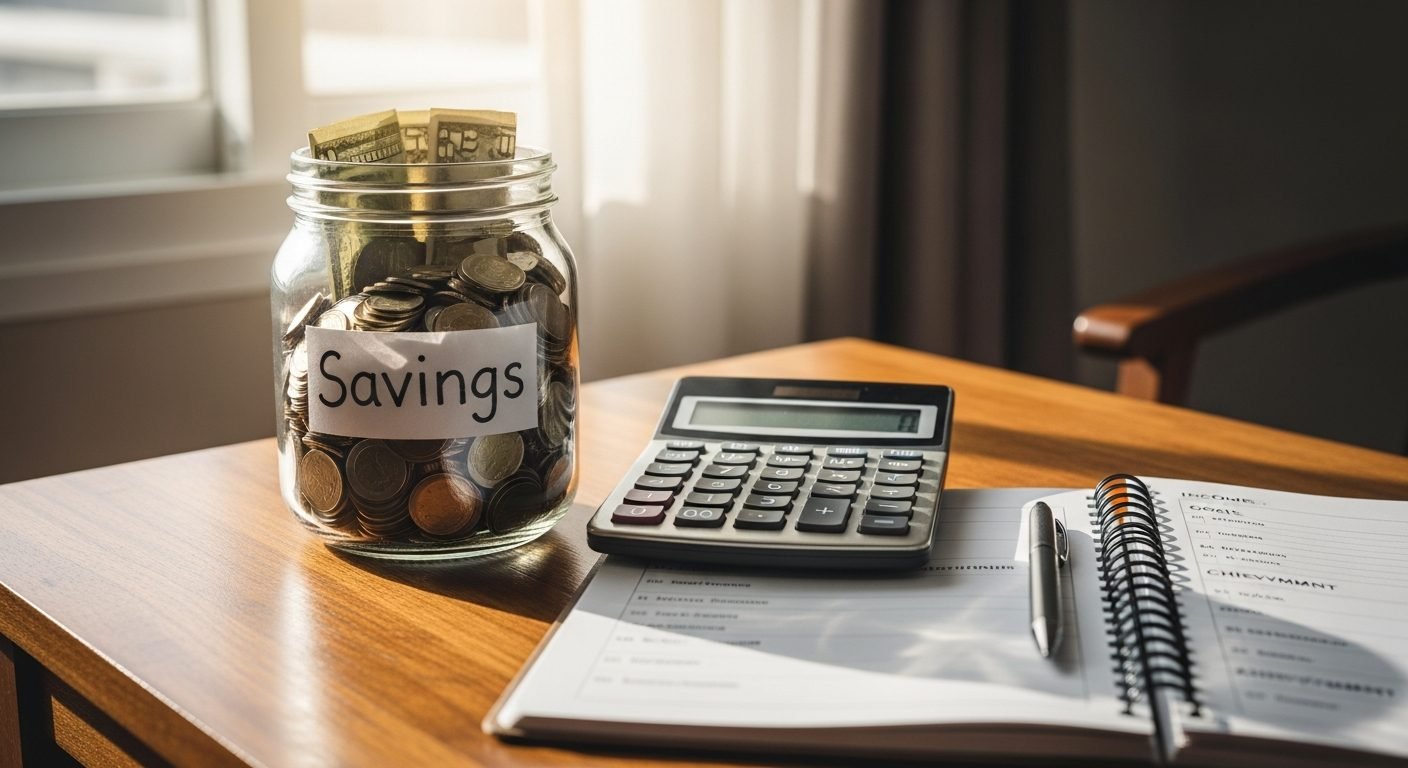
  • How to Build a $10,000 Emergency Fund in 90 Days (Even on a Tight Budget)

    How to Build a $10,000 Emergency Fund in 90 Days (Even on a Tight Budget)

    The Emergency That Changes Everything

    It starts as a normal Tuesday. Then your transmission fails. Or you get laid off. Or a medical bill arrives that your insurance doesn’t fully cover.

    If you have three to six months of expenses in a savings account, this is an inconvenience. You handle it, you move on.

    If you don’t, this is the beginning of a debt spiral. Credit cards get used. Interest compounds. The financial hole deepens for months or years after the original emergency is resolved.

    An emergency fund isn’t a luxury or an aspirational goal. It’s financial infrastructure — as essential as having a roof over your head. Without it, you’re one unexpected event away from financial crisis at all times.

    This guide shows you exactly how to build one fast, even if you think you can’t afford to save.

    What Is the Right Emergency Fund Size?

    The standard financial advice: 3–6 months of expenses.

    More specifically:

    • 3 months — if you have a stable job, low debt, no dependents, and a partner who also works
    • 6 months — if you’re self-employed, have dependents, work in a volatile industry, or have health issues
    • 9–12 months — if you run a business or have highly irregular income

    To calculate your number: Add up your non-negotiable monthly expenses (rent/mortgage, food, utilities, insurance, debt minimums, transportation). Multiply by 3, 6, or 9. That’s your target.

    Important: Don’t let the full target number paralyze you. A $1,000 emergency fund prevents most financial emergencies. Start there and build from it.

    Why People Fail to Build Emergency Funds (And How to Avoid It)

    Mistake 1: Keeping it in a checking account
    Money that’s too accessible gets spent. Your emergency fund must be in a separate high-yield savings account that’s slightly inconvenient to access (2–3 business day transfer time is perfect).

    Mistake 2: Waiting until the “right time”
    There’s never a right time. If you wait until you have extra money to start saving, you’ll wait forever. The system creates the savings.

    Mistake 3: Saving whatever’s “left over”
    Spending first and saving leftovers means you’ll save nothing. Pay yourself first — automate savings before you touch the money.

    Mistake 4: Stopping after the first setback
    You build up $800, then an unexpected expense wipes it out. Most people stop here. The right response: start rebuilding immediately. The cycle gets faster each time.

    Step 1: Open a High-Yield Savings Account Today

    Your emergency fund belongs in a high-yield savings account (HYSA) — not your checking account, not a brokerage account, not invested in the stock market.

    Why HYSA:

    • FDIC insured (safe)
    • Currently earning 4–5% APY (vs 0.5% at traditional banks)
    • Separate from spending money (reduces temptation)
    • Accessible in 2–3 business days (enough friction to prevent impulse withdrawals)

    Best options (no fees, high rates):

    • Marcus by Goldman Sachs
    • Ally Bank
    • SoFi
    • Discover Online Savings

    Opening takes 10 minutes. Do it before finishing this article.

    Step 2: Calculate Your 90-Day Savings Sprint Target

    For a $10,000 emergency fund in 90 days, you need to save approximately $3,333 per month, or $111 per day, or $778 per week.

    If that seems impossible, don’t panic. Most people who run this sprint use a combination of:

    1. Expense cuts — temporary reductions in discretionary spending
    2. Income increases — side income specifically earmarked for the fund
    3. One-time cash infusions — selling items, using windfalls

    You likely don’t need to do all three perfectly. Even covering 60–70% of the target through this sprint, then reaching 100% over 120–150 days, produces the same outcome with less stress.

    Step 3: Find the Money Through Expense Auditing

    Most people have $300–$800/month in expenses they could painlessly cut for 90 days — they’ve just never looked.

    Run a subscription audit:
    Log into your bank and credit card statements. List every recurring charge. Cancel anything you don’t actively use and love. The average American pays for $50–$100/month in unused or forgotten subscriptions.

    The 30-day rule on discretionary purchases:
    For any non-essential purchase over $50, wait 30 days before buying. Most wants evaporate in 30 days. The money that would have been spent goes to the fund.

    Common 90-day temporary cuts that add up:

    • Pause streaming services you use least (-$15–$30/month)
    • Meal prep instead of restaurant meals (-$200–$400/month)
    • Delay clothing and shoe purchases (-$50–$150/month)
    • Use the car instead of Uber/Lyft (-$50–$100/month)
    • Cancel gym membership and work out at home (-$30–$80/month)

    None of these are permanent. You’re doing a 90-day sprint, not a lifestyle overhaul.

    Step 4: Boost Income With a Side Sprint

    The fastest path to $10,000 is usually a combination of cutting AND earning more, especially if your margin after fixed expenses is thin.

    Fastest-earning options (sorted by hourly return):

    Sell what you own
    Go through your home with fresh eyes. Furniture, electronics, clothing, sporting equipment, books. Facebook Marketplace and eBay move items quickly. Most people find $300–$1,500 in one weekend of selling.

    Gig economy work
    DoorDash, Uber, Instacart, TaskRabbit — flexible, immediate, no resume required. 10 hours per week at $20–$30/hour = $800–$1,200/month additional income.

    Freelance your skills
    Writing, design, coding, social media management, bookkeeping, virtual assistance — if you have any marketable skill, someone needs it. Upwork and Fiverr get your first client within days.

    Overtime or extra shifts
    Often the easiest money because you’re already trusted in the role. One extra shift per week can generate $400–$600/month depending on your rate.

    Monetize a hobby
    Photography, tutoring, music lessons, fitness coaching, baking. Even $200–$300/month from a hobby accelerates the sprint significantly.

    Step 5: Automate the System

    Once you know your monthly target, automate it.

    Set up an automatic transfer from your checking account to your HYSA on the same day as your paycheck. Make it non-negotiable — not “what’s left over” but the first thing that moves.

    Then live on what remains. This single behavioral design principle — paying yourself first — is the foundation of every successful saver’s system.

    The envelope math:
    If your paycheck is $4,500 and you auto-transfer $1,000 to savings on payday, you have $3,500 to live on. Your brain adjusts to $3,500 as your “budget.” Most people find this painless after the first month.

    Step 6: Protect the Fund Once You Have It

    An emergency fund is only for genuine emergencies:

    • Job loss
    • Medical emergency (not elective procedures)
    • Critical car repair preventing you from working
    • Essential home repair (heating failure, roof leak)

    Not emergencies:

    • Sales on items you want
    • Planned expenses you forgot to budget for
    • Vacation opportunities
    • “I’ll pay it back next month”

    Create a rule: touching the emergency fund requires 48 hours of deliberation. Write down what the emergency is. If you still think it qualifies in 48 hours, use the fund.

    When you do use it — for a real emergency — replenish it before any other financial goal.

    What to Do After the Emergency Fund Is Funded

    Once you have 3–6 months saved, your financial priority order typically shifts to:

    1. Employer 401(k) match (free money — always capture this first)
    2. High-interest debt payoff (anything above 7% interest)
    3. Max Roth IRA ($7,000/year in 2025)
    4. Max 401(k) contributions
    5. Taxable brokerage investing
    6. Additional savings goals (home down payment, etc.)

    The emergency fund is your foundation. Everything else is built on top of it.

    The Compound Effect of Financial Security

    Here’s what most personal finance articles don’t tell you: having an emergency fund changes how you make decisions.

    When you’re one emergency away from crisis, you take less risks. You stay in jobs you hate because you can’t afford to lose the paycheck. You avoid investments because you might need the money. You accept lower pay because you have no negotiating leverage.

    With a funded emergency fund, everything changes. You can negotiate from strength, walk away from bad situations, take calculated risks, and make decisions based on what’s best long-term rather than what’s immediately necessary.

    Financial security is the prerequisite for financial growth.

    Start the sprint today. Open the account. Set the automatic transfer. You’ll reach the other side of financial security faster than you think.

  • Compound Interest: The Simple Math That Makes Ordinary People Wealthy

    Compound Interest: The Simple Math That Makes Ordinary People Wealthy

    Einstein’s Eighth Wonder of the World

    Albert Einstein allegedly called compound interest “the eighth wonder of the world,” saying: “He who understands it, earns it. He who doesn’t, pays it.”

    Whether or not Einstein actually said this, the sentiment is profound. Compound interest is simultaneously the most powerful wealth-building force available to ordinary people and the most destructive force working against those who carry debt.

    Understanding it completely could be worth millions to you over a lifetime.

    What Is Compound Interest?

    Simple interest is calculated only on your original principal. If you invest $1,000 at 10% simple interest, you earn $100 per year — always on the original $1,000.

    Compound interest is calculated on your principal and all previously earned interest. Your interest earns interest. This creates exponential growth.

    Year 1: $1,000 × 10% = $100 interest → Balance: $1,100
    Year 2: $1,100 × 10% = $110 interest → Balance: $1,210
    Year 3: $1,210 × 10% = $121 interest → Balance: $1,331

    The difference seems small early on. Over decades, it becomes extraordinary.

    The Rule of 72

    Want to quickly estimate how long it takes to double your money? Divide 72 by your annual return rate.

    • At 6% returns: 72 ÷ 6 = 12 years to double
    • At 8% returns: 72 ÷ 8 = 9 years to double
    • At 10% returns: 72 ÷ 10 = 7.2 years to double

    The S&P 500 has historically returned approximately 10% annually before inflation. This means invested money in a broad index fund has doubled roughly every 7 years.

    The Two Variables That Matter Most

    1. Time (The Most Powerful Variable)

    Let’s compare two investors — Emily and Marcus:

    Emily starts investing $300/month at age 22 and stops at 32 (10 years). She invests $36,000 total and never invests another dollar.

    Marcus waits until 32 to start, then invests $300/month until 62 (30 years). He invests $108,000 total — three times more than Emily.

    At age 62, assuming 8% annual returns:

    • Emily’s portfolio: $740,000+
    • Marcus’s portfolio: $440,000+

    Emily invested for only 10 years and wins by $300,000 — because she started 10 years earlier. This is the magic of time.

    2. Rate of Return

    A 2% difference in annual returns, compounded over 30 years, creates dramatic differences in outcomes.

    $10,000 invested for 30 years:

    • At 6%: $57,435
    • At 8%: $100,627
    • At 10%: $174,494

    This is why minimizing fees matters enormously. A mutual fund charging 1.5% vs. an index fund charging 0.03% may seem trivial — over 30 years, that fee difference consumes tens of thousands of dollars.

    The Compound Effect on Debt (The Other Side)

    Compound interest works just as powerfully against you when you carry debt.

    A $5,000 credit card balance at 20% APR, making only minimum payments, will take over 30 years to pay off and cost you more than $15,000 in interest — three times the original balance.

    High-interest debt is negative compound interest. It should be eliminated with the same urgency that you invest.

    How to Start Benefiting from Compound Interest Today

    Step 1: Open a Tax-Advantaged Account

    • 401(k): Employer-sponsored. Contribute at least enough to capture any employer match — that’s an immediate 50–100% return.
    • Roth IRA: Individual account. Contributions are after-tax, but growth and withdrawals in retirement are completely tax-free. Maximum $7,000/year (2025–2026).
    • HSA: If eligible, triple-tax-advantaged. Contributions are tax-deductible, growth is tax-free, withdrawals for medical expenses are tax-free.

    Step 2: Invest in Low-Cost Index Funds

    Don’t try to pick stocks. Instead, invest in broad market index funds:

    • Vanguard Total Stock Market Index (VTSAX)
    • Fidelity Zero Total Market Index (FZROX)
    • iShares Core S&P 500 ETF (IVV)

    These funds own tiny pieces of hundreds or thousands of companies, provide instant diversification, and charge minimal fees.

    Step 3: Automate Your Investments

    Set up automatic transfers from your paycheck or bank account to your investment account. This removes the decision and ensures you invest consistently — through market ups and downs.

    Step 4: Increase Contributions Over Time

    Start with whatever you can afford. As your income grows, increase your contribution rate. Even adding 1% more each year creates dramatic long-term differences.

    The Mindset Shift That Makes This Work

    Compound interest rewards patience and punishes impatience. The biggest returns come in the final years — not the early ones.

    This is counterintuitive. You may invest for 20 years and feel like nothing is happening. Then, suddenly, in years 25–30, your portfolio explodes.

    Stay the course. Don’t sell during downturns. Keep investing through recessions, crashes, and uncertainty. The investors who hold through market drops are the ones who benefit from the subsequent recoveries.

    Common Mistakes That Destroy Compound Growth

    Understanding compound interest intellectually and applying it correctly are two different things. These mistakes quietly cost investors thousands:

    Stopping During Market Downturns

    Markets drop 20–40% periodically. Investors who sell during crashes lock in losses and miss the recovery — which has always come, historically. The investors who hold through downturns benefit from buying shares at lower prices during their regular contributions, then riding the full recovery. This is dollar-cost averaging working in your favor.

    Ignoring Tax-Advantaged Accounts

    Investing in a taxable brokerage account instead of maxing your 401(k) and Roth IRA first means paying unnecessary taxes on your gains — which dramatically reduces the compound rate. Always prioritize tax-advantaged accounts before taxable accounts.

    Chasing Performance

    The fund that returned 40% last year rarely repeats that performance. Investors who chase recent high performers consistently underperform the market. Low-cost, diversified index funds beat the vast majority of actively managed funds over 10+ year periods.

    Lifestyle Inflation Without Parallel Investment Increases

    As income rises, spending typically rises proportionally — leaving investment contributions unchanged. The high earner who maintains a modest lifestyle and invests the difference accumulates wealth dramatically faster than the same earner who spends every raise.

    The Inflation Factor

    Compound interest works with inflation and against it. At 8% annual returns with 3% inflation, your real return is approximately 5%. This is why the goal isn’t just to save — it’s to invest in assets that outpace inflation.

    Cash in a savings account earning 1% loses real value every year in an inflationary environment. Broad stock market index funds have historically outpaced inflation by 5–7% annually over long periods.

    Start Now, Not Later

    The difference between starting today and starting one year from now compounds across decades. On a $500/month investment at 8% over 30 years, one year’s delay costs approximately $68,000 at retirement.

    The best time to start investing was 10 years ago. The second-best time is today.

    Open an account. Make your first investment. Let time do the heavy lifting.